
Vanderburgh County Probate Records
Probate in Vanderburgh County is not handled by a separate surrogate court, orphan's court, or stand-alone probate court. The research map identifies the local probate forum as the Probate Division of the trial court, with filings moving through the Vanderburgh County trial courts and the Clerk of the Courts. That matters for search strategy. A public user who wants an estate docket, a will filing, a guardianship order, or a trust case should think in terms of court records first, then Clerk copy channels for the official document.
Typical Vanderburgh County probate records include wills, estate administrations, guardianships, trusts, inventories, creditor notices, accountings, orders appointing personal representatives, guardianship reports, final distributions, and motions tied to the estate or protected person. Estate filings and court orders are often public court records when no court rule closes them. Guardianship records can be more sensitive because they may include health, capacity, minor-child, or financial-account details. Public summaries may exist while supporting documents remain redacted or unavailable online.
The practical split is simple. Use Indiana MyCase for public case activity, then use the Vanderburgh County Clerk public-records request process when a probate document is not online, when an older file has to be pulled, or when a certified copy is needed for court, banking, title, or estate administration purposes.
Probate Terms Defined
Probate files use terms that are easy to misread when a person is looking at a docket entry without the full document. These definitions are limited to the way the words commonly appear in Vanderburgh County probate records and Indiana court records.
- Testator
- The person who made a will. A probate file may include the will, petitions about the will, and orders deciding how it is treated.
- Executor
- The person named in a will to carry out estate duties. Indiana records may also use personal representative for the person appointed by the court.
- Intestate
- A case where a person died without a valid will, or where no will is being used to control the estate.
- Guardianship
- A court case appointing a person to act for a minor or incapacitated adult. Many guardianship documents contain sensitive facts.
- Conservatorship
- A protective case focused on managing a person's property or finances. Indiana terminology may vary by case type and order.
Other common probate words include inventory, accounting, creditor claim, notice, final report, and distribution. An inventory lists estate assets. An accounting reports money received and paid. A final report usually appears near the close of an estate or guardianship matter.
Search Vanderburgh County Probate
The main online channel for Vanderburgh County probate records is Indiana MyCase. MyCase is a statewide public case-search portal for public, non-confidential Indiana trial court information. It is useful for case numbers, parties, filing dates, case status, chronological case summary entries, hearings, and some public documents. The Indiana Judicial Branch warns that MyCase is not the official court record. Official and certified probate copies come from the court or Clerk that maintains the file.
- Open MyCase and search by party, estate name, or case number. If the name is common, filter to Vanderburgh County.
- Use probate, estate, guardianship, or trust case-type filters when available. Date ranges help when an older estate has a common family name.
- Open the matching case and compare the caption, court, filing date, and case type before relying on the entry.
- Review the chronological case summary for petitions, orders, inventories, accountings, notices, and closing entries.
- Contact the Clerk of the Courts for official copies, certified copies, older probate files, or documents not displayed online.
The Clerk request channel is important for probate because older estate files and archived matters may not be fully visible online. The Clerk's instructions say requesters should describe documents well enough for staff to locate them and should include the court if known, such as Circuit, Superior, or Probate, plus names, dates, case numbers, and document types.
| Field Label | Type | Required | Search Notes |
|---|---|---|---|
| Party / estate name | Text | Optional | Search decedent, estate, guardian, or protected person when public. |
| Case number | Text | Optional | An exact Indiana cause number is the cleanest search. |
| County | Filter | Optional | Select Vanderburgh to narrow statewide results. |
| Case type | Filter | Optional | Use probate, estate, guardianship, or trust where available. |
| Date range | Date | Optional | Useful for older estate files and common surnames. |
Vanderburgh County Probate Court
Vanderburgh County probate work is part of the local trial court system. The county uses both Vanderburgh Circuit Court and Vanderburgh Superior Court, and probate filings are handled through the Clerk of the Courts rather than a separate probate clerk. The central courthouse destination for courtrooms and filings is the Civic Center court area in downtown Evansville. Probate users should confirm the exact room, judge, or hearing location from the case notice, MyCase entry, or Clerk because Circuit, Superior, family, small claims, traffic, and other functions share the Civic Center court complex.
Probate Division of the trial court
Vanderburgh Circuit Court / Superior Court
825 Sycamore Street
Evansville, IN 47708
812-435-5192
Clerk records requests: 812-435-5160
Vanderburgh County Clerk of the Courts
825 Sycamore Street
Evansville, IN 47708
P.O. Box 3356
Evansville, IN 47732
812-435-5160
Fax: 812-435-5849
The Old Vanderburgh County Courthouse is part of local court history, not the ordinary filing counter for active probate records. The Old Courthouse history site describes a major nineteenth-century government building tied to Evansville's court past. Active probate records route to the Civic Center court and Clerk offices.
Probate Filing Fees
The county fee schedule lists probate estate, guardianship, and trust cases at one filing amount. Other costs may apply when a case requires sheriff service, certified copies, or related civil filings. The table below uses only fees documented in the Vanderburgh research file.
| Item | Amount |
|---|---|
| Probate estate case | $177 |
| Guardianship case | $177 |
| Trust case | $177 |
| Additional defendant in civil filing | $10, when applicable to a related civil filing |
| Sheriff service before judgment | $28 one-time fee, when service is required |
| Regular marriage/divorce copy through Official Records Online | $1 each plus $10 transaction convenience fee |
| Certified marriage/divorce copy through Official Records Online | $4 each plus $10 transaction convenience fee |
Probate copy fees were not separately stated in the research file. For certified probate copies, use the Clerk contact channel and ask staff to quote the current copy and certification cost before mailing payment.
The county civil filing page is also relevant when a probate dispute creates a related civil filing or when service costs apply. Do not assume a filing fee shown for an estate includes all later service, copy, or certified-document costs.
What Vanderburgh Probate Records Show
A Vanderburgh County probate docket can show the case caption, cause number, court, filing date, case status, parties, attorney information, and the chronological case summary. In an estate case, entries may refer to a petition to open the estate, appointment of a personal representative, filing of a will, notices to heirs or creditors, inventories, accountings, claims, orders, and final distribution. In a guardianship case, the docket may show petitions, appointment orders, reports, hearings, and later accountings or review entries.
Some probate documents are not the same as the docket. The docket is the event list. The actual pleading, order, will, inventory, accounting, or report is a document. MyCase may show some public documents, but older records, certified copies, and unavailable documents require a Clerk request. That distinction is critical when banks, title companies, heirs, or other courts ask for a certified order or letters showing who has authority to act.
The STATS Indiana Vanderburgh profile gives useful local context for older probate research by confirming Evansville as the county seat and noting that Vanderburgh County was formed in 1818. Older estates may require more date context because the same family names can appear across many decades of local records.
The county Recorder's Tapestry and Laredo recorded-document options may help with deeds, liens, and recorded instruments tied to an estate. Those systems are not a replacement for probate court records, but they can help when a probate question turns on real estate, transfers, or recorded documents.
Restricted Vanderburgh Probate Records
Public access to Vanderburgh County probate records depends on the type of filing and the information inside it. Indiana court records are generally public unless a rule, statute, or court order excludes them. Indiana Access to Court Records Rule 5 lists records and information excluded from public access, and Rule 9 provides a process to request access to a record otherwise excluded. A person should not assume that every page in a probate file is available online.
Guardianship and protected-person records can include medical facts, capacity findings, financial-account details, Social Security information, minor information, and reports about daily care. Those details may be redacted or withheld even when the case number, docket, or some orders are public. Adoption, juvenile, mental-health, and sealed matters also have narrower public access. If a probate-related record is restricted, the Clerk may confirm process, but the court decides access under the applicable rule or order.
Note: A public MyCase entry is useful for research, but certified probate authority must come from the Clerk or court.
Vanderburgh Probate Sources
The county civil filing page is a key source for probate fee context because it lists additional civil filing and service fees connected to court filings.
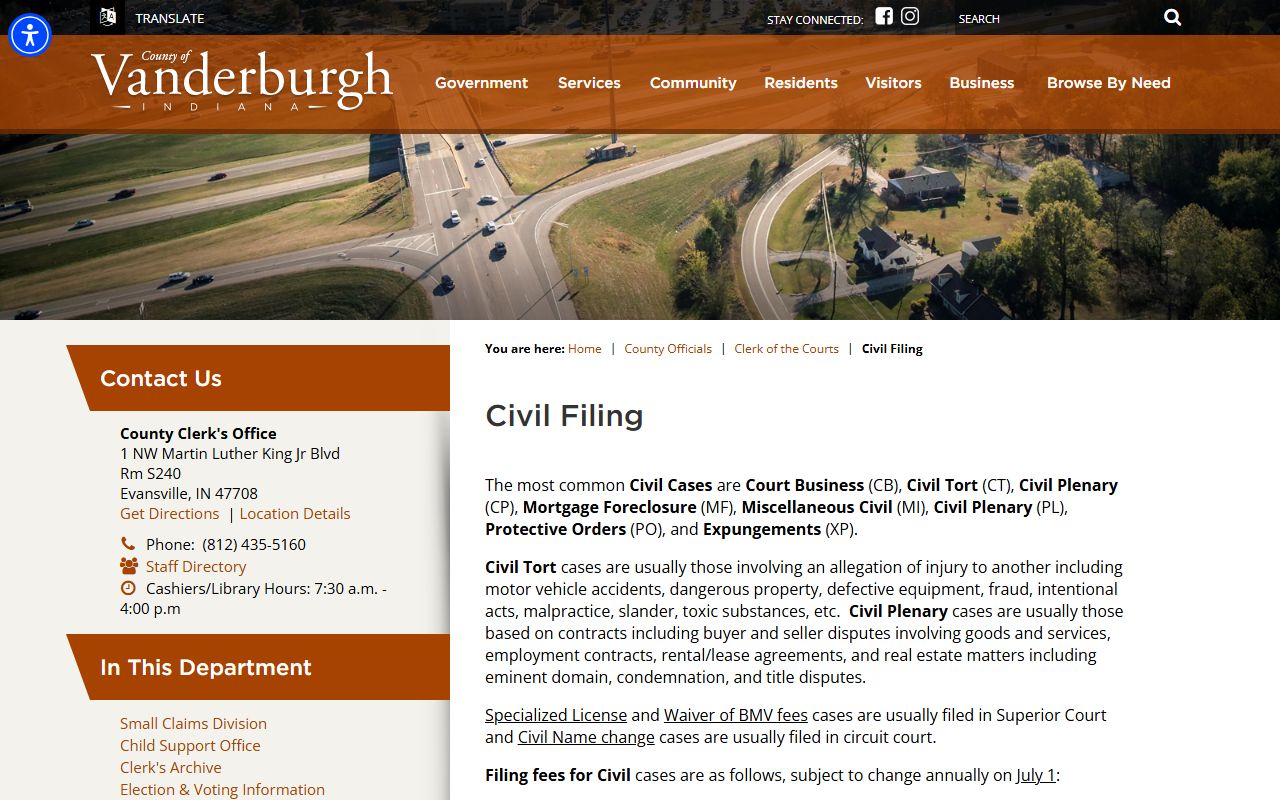
That fee context helps separate the base probate filing fee from later service, copy, and related civil costs.
The STATS Indiana Vanderburgh County profile supports local probate research by identifying the county seat, formation year, and population context.
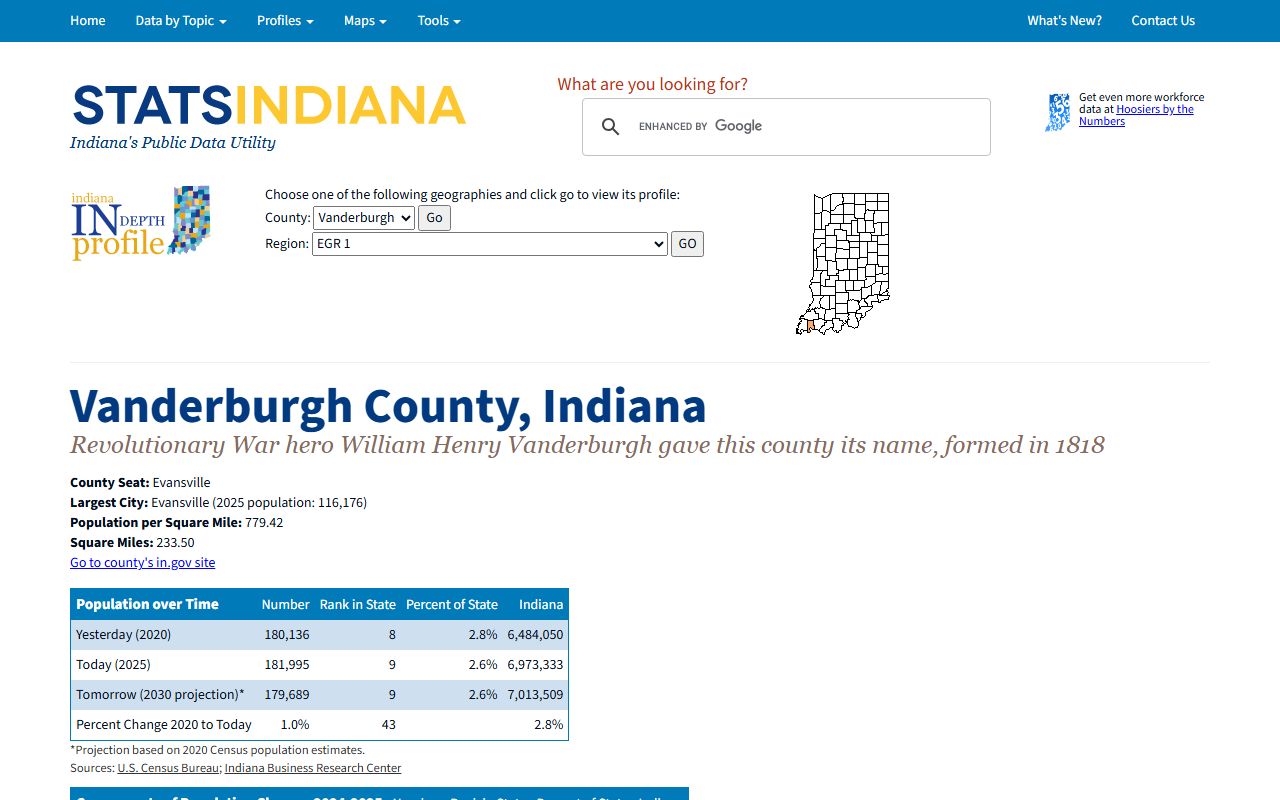
County formation and seat details are useful when older estates require historical context beyond a modern online search.
The Old Vanderburgh Courthouse history page explains the historic courthouse tied to Evansville's older court identity.
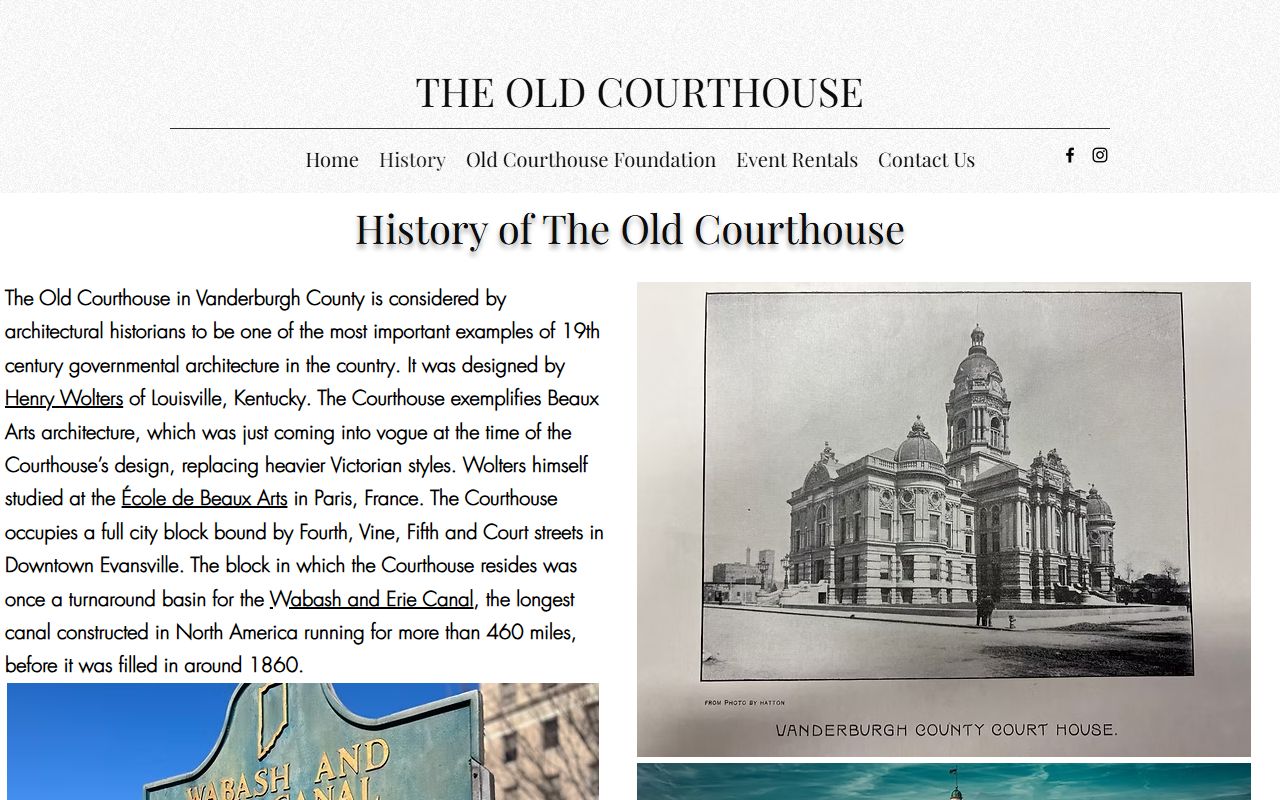
Modern probate filings route through the Civic Center court system, but the older courthouse remains useful local context for long-range record searches.
The Recorder's Tapestry and Laredo page documents paid recorded-instrument search options that may connect to estate real property questions.
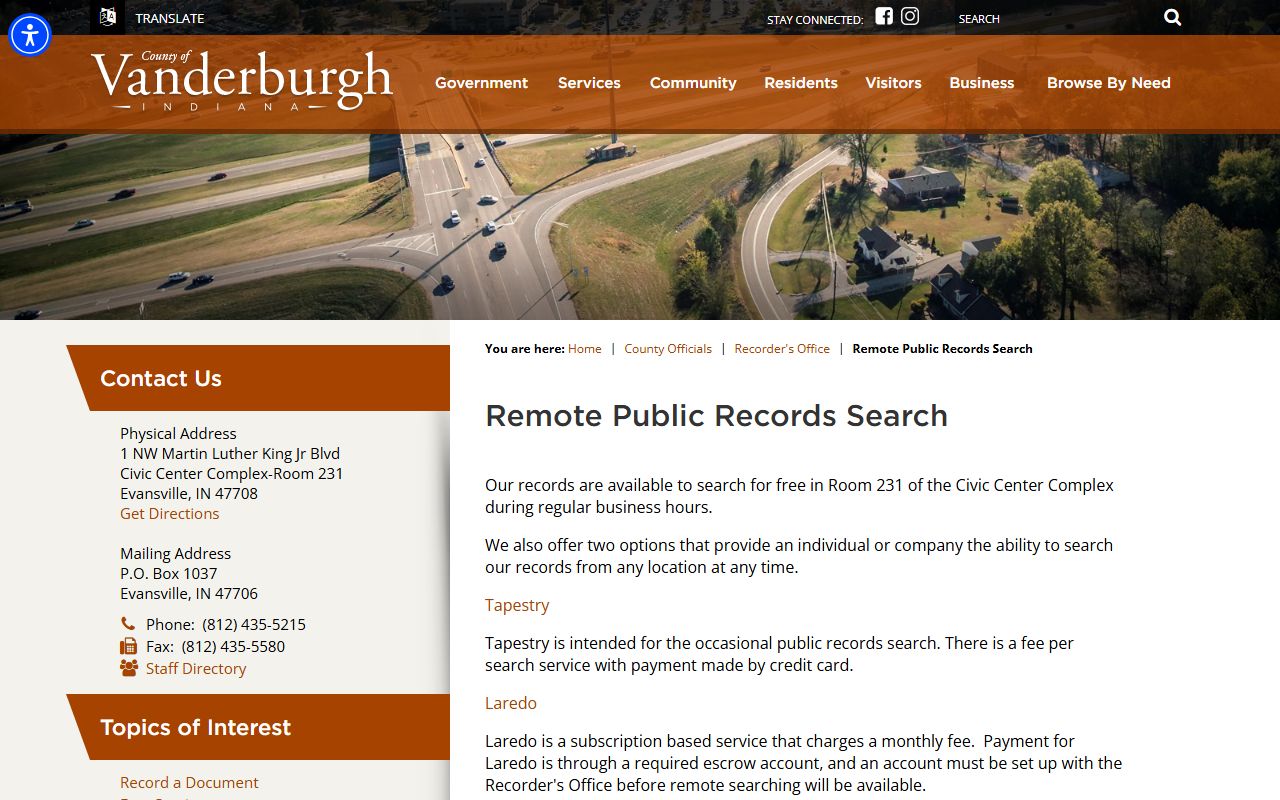
Recorded-instrument searches can supplement probate case research, especially when an estate involves deeds, liens, or transfers.