
Vanderburgh County Arrest Records
Arrest records start on the law-enforcement and jail side. In Vanderburgh County, the Sheriff's Office maintains current inmate lookup, recent bookings, warrant search, and public-records request channels. A booking record may show a person in custody, a booking time, age, gender, city and state, a photo or no-photo flag, charge descriptions, bond amount, and bond type. It is a custody record, not the final court result.
Court charges after arrest begin when the prosecutor files the formal accusation in court. Once charges are filed, MyCase and the Clerk's court record channels become more important than the booking page. A court charge record can show the cause number, charge description, statute or citation, level, court, plea, disposition, sentence path, and bond entries. For the full case file and outcome, use the local criminal court records page context; for current custody, use the jail roster page.
The Vanderburgh County Sheriff's inmate lookup is assigned to this page because it shows booking-side arrest and charge details.
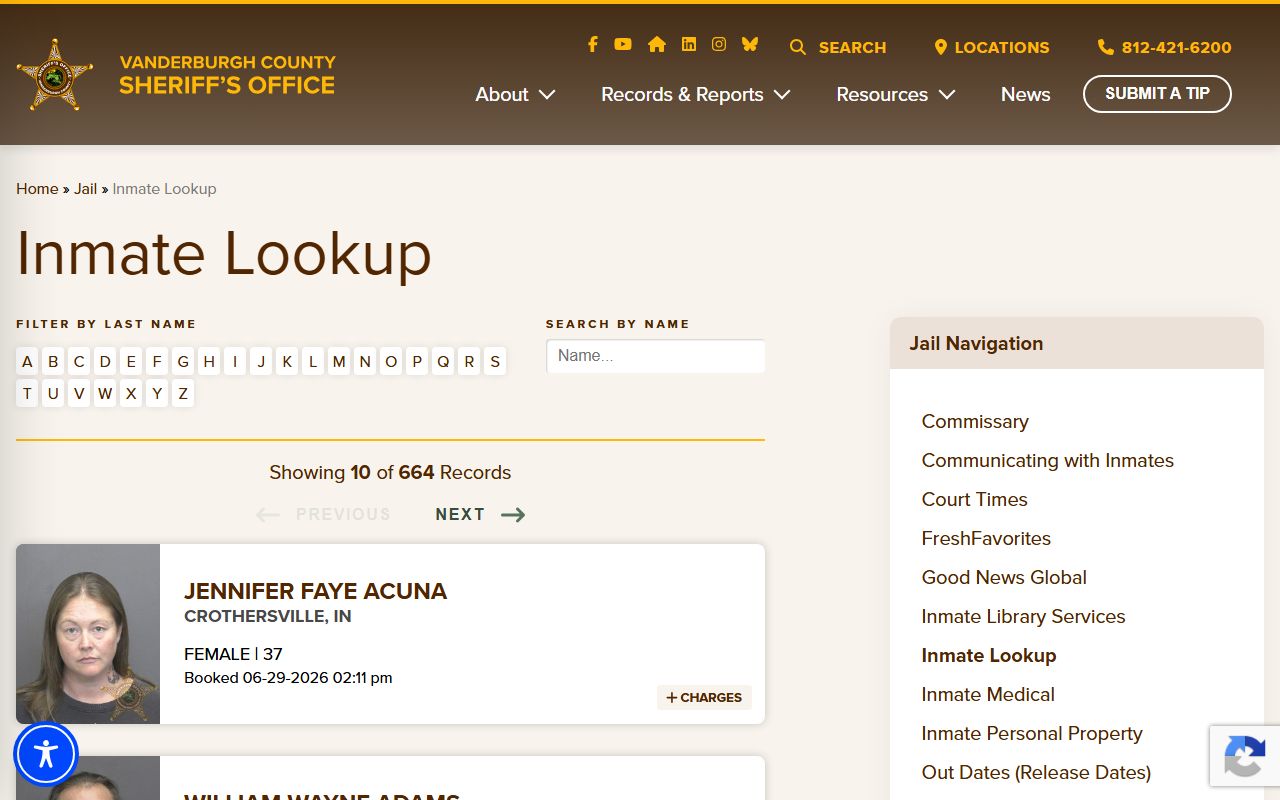
The inmate lookup can identify booking charges and bond details, while the court case shows what charges were formally filed and how they ended.
Find Vanderburgh County Charges
Use two channels together. Start with the Sheriff's current inmate lookup or recent bookings if the question is about an arrest, custody status, booking date, or immediate bond information. Then search Indiana MyCase by defendant name, cause number, county, case type, or date to find the prosecutor-filed charges and later court status. For official copies, use the Clerk of the Courts request process.
- Search the sheriff inmate lookup or recent booking page for current or recent custody records.
- Record the person's name, booking date, charge description, and bond information if shown.
- Search MyCase by name and filter to Vanderburgh County to find the filed court case.
- Open the case and read the charge list, docket entries, plea, disposition, and sentence fields.
- Request copies from the Clerk or sheriff depending on whether the needed record is a court file, incarceration record, incident report, or accident report.
The Sheriff's recent booking records page is another assigned source for arrest records and booking-side charge details.
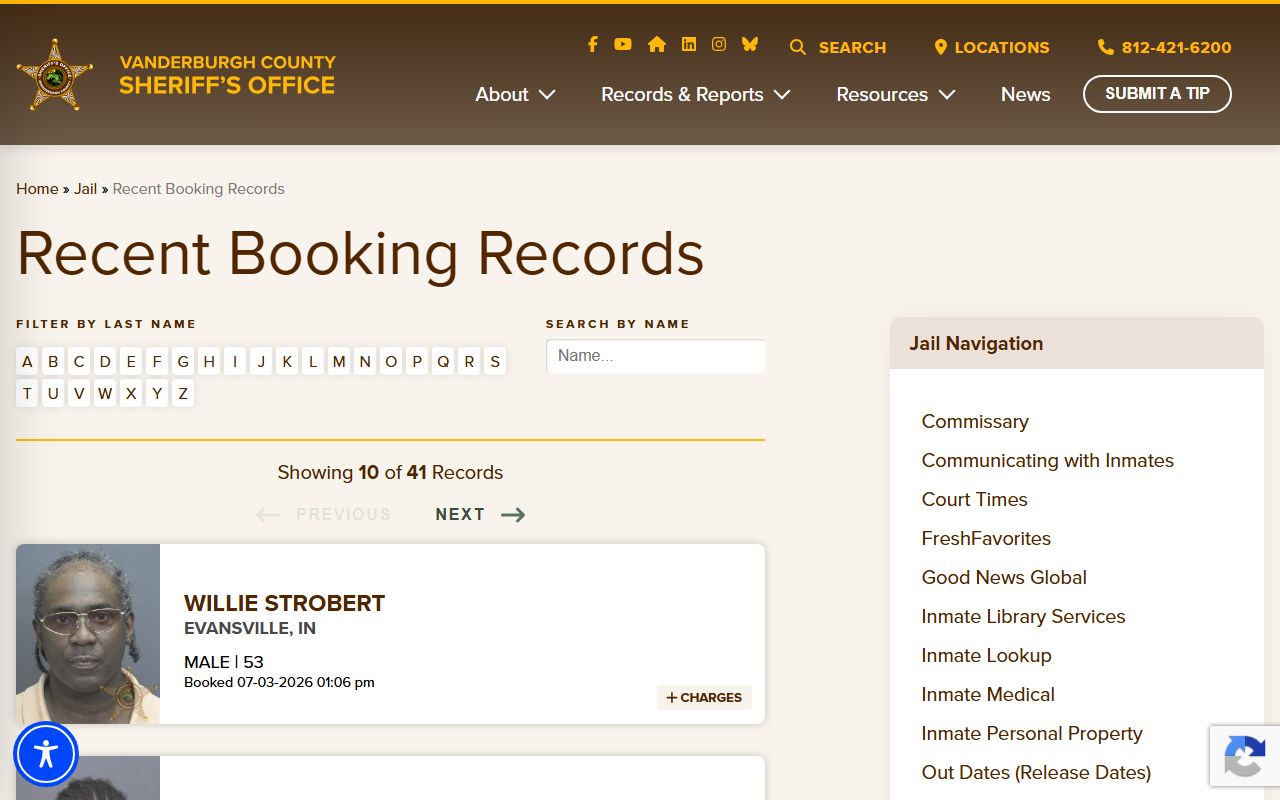
Recent bookings can help locate a new arrest before the court case has a complete public docket history.
Charges After Arrest
After an arrest, the formal court charge usually comes from the prosecutor. Indiana uses county prosecuting attorneys rather than district attorneys. IPAC identifies Diana Moers as the Vanderburgh County Prosecutor, and the prosecutor decides what charges to file from the available law-enforcement facts. The court charge record begins when the charge is submitted to the court and indexed under a cause number.
| Document | Filed By | Common Use | Record Effect |
|---|---|---|---|
| Complaint | Officer or prosecutor | Initial accusation in many criminal matters. | Can start or support the filed case. |
| Information | Prosecutor | Common formal charging document for filed criminal cases. | States the prosecutor's official charge in court. |
| Indictment | Grand jury | Used when charges are brought through grand jury action. | Starts or supports prosecution through a formal accusation. |
The IPAC Vanderburgh County Prosecutor profile is the assigned source for the local prosecuting attorney role.
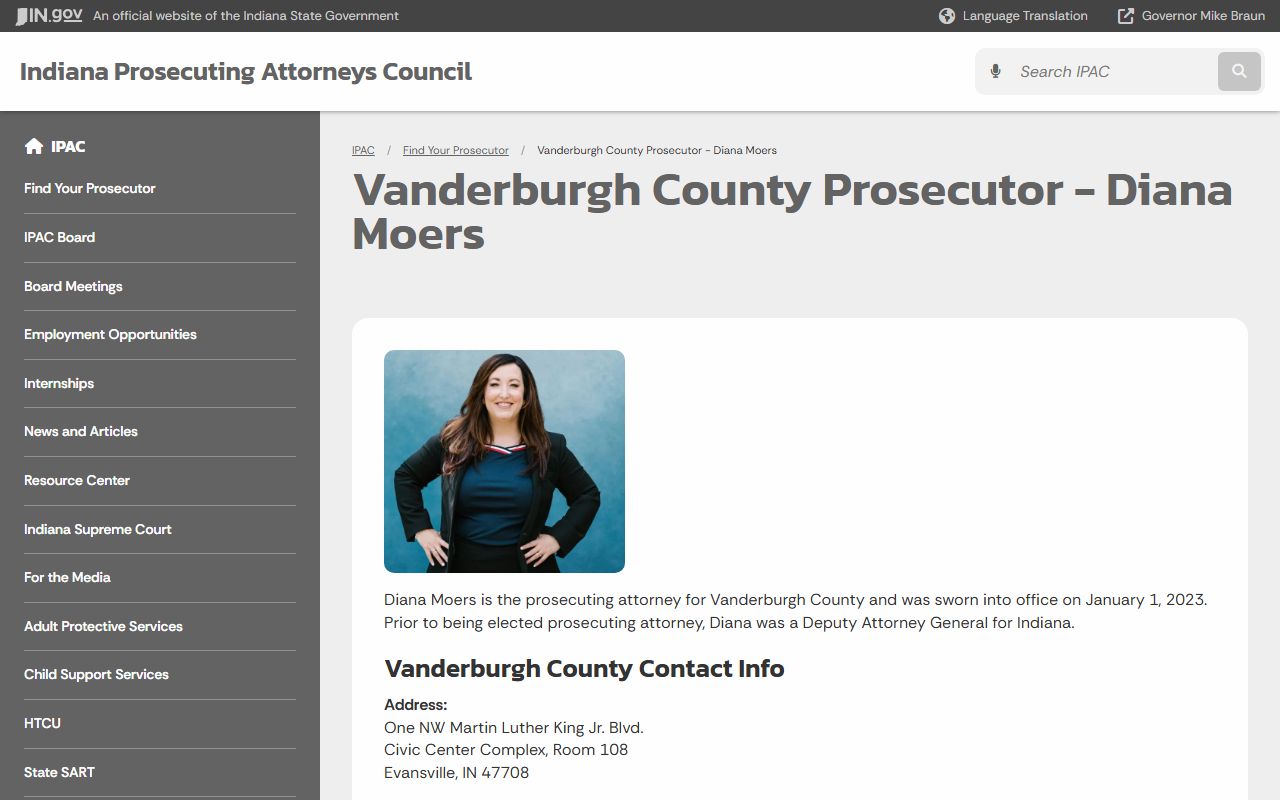
That prosecutor role is the bridge between arrest records and the court charges that appear in the criminal case file.
Vanderburgh County Charge Status
A charge can change after filing. Prosecutors can amend a charge, add a charge, reduce a level, dismiss a count, or proceed on one count while another ends separately. The court docket may show multiple charge entries with different outcomes. Read the latest disposition for each count rather than relying only on the first booking charge or first court charge.
| Status | What It Means |
|---|---|
| Pending | The charge has been filed and has not reached final disposition. |
| Amended | The prosecutor or court record changed the charge wording, statute, or level. |
| Reduced | The filed charge was lowered to a different offense or severity level. |
| Dismissed | The charge ended without a conviction on that count. |
| Disposed | The charge has a recorded outcome, such as guilty, dismissed, acquitted, or another court result. |
Note: A booking charge can differ from the prosecutor-filed court charge after review.
Charges vs Convictions
Being charged is not the same as being convicted. A Vanderburgh County arrest record may list suspected or booking charges. A court record may later show the prosecutor's formal charges. The final criminal court record must be read for disposition and sentence. Some charges are dismissed, some are amended, and some result in a conviction after plea or trial.
| Point | Charge | Conviction |
|---|---|---|
| Meaning | An accusation or filed count. | A guilty plea, verdict, or finding entered by the court. |
| Source | Booking record, prosecutor filing, and court charge list. | Disposition, judgment, and sentencing entries. |
| Can change | Yes, charges may be amended, reduced, or dismissed. | The conviction controls the final criminal outcome unless later changed by court order. |
| Where to confirm | Sheriff and MyCase sources. | MyCase, Clerk certified copies, and final court orders. |
Charge Codes and Bond
MyCase criminal entries can include offense descriptions, statutes or citations, level or class, bond, plea, disposition, and sentence events when those details are public. The sheriff warrant and inmate data can also show bond amounts or no-bond indicators. A single arrest can produce several charge lines. Each line may have its own status and disposition, so the final result should be read count by count.
Bond should not be read as guilt or innocence. It is a release condition or security for future court appearance. The sheriff's warrant and jail sources also list warrant and bond phone channels. For misdemeanor and traffic warrants issued from the local court, the official Misdemeanor and Traffic page says a person can appear in Room S231 with the case number to be added to the next available court session.
Vanderburgh County Arrest Requests
Not every arrest-related record is a court record. Incident reports, accident reports, incarceration records, administrative records, medical records, and limited criminal-history requests route through the Sheriff's public records channels. The sheriff's APRA page says in-person requests receive a response within 24 hours and mailed or faxed requests within seven calendar days. A response can be a status update, a denial based on an exception, or a production timeline.
The Sheriff accident report request page is assigned to this page because crash reports are arrest-adjacent records but separate from court charge records.
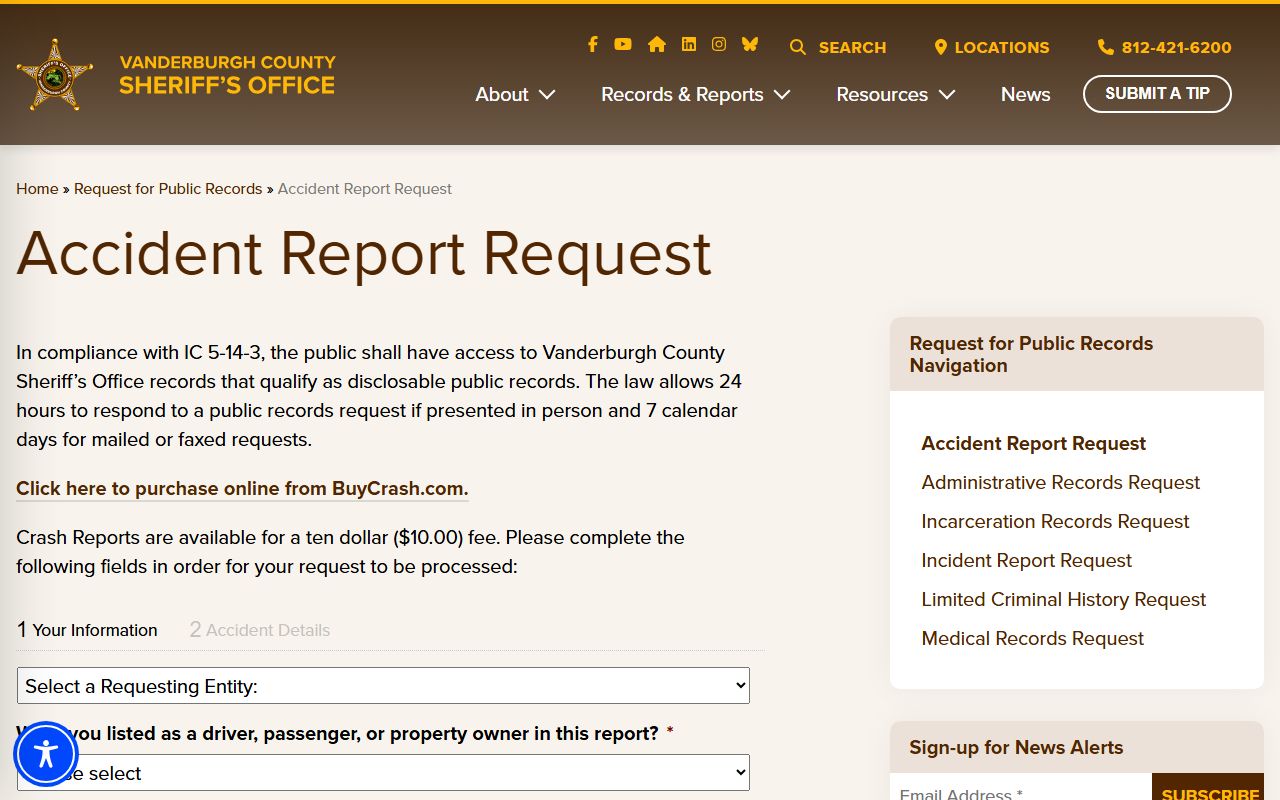
Crash reports follow the sheriff request path and have a listed report fee, unlike a court charge lookup in MyCase.
The Sheriff incident report request page is assigned because incident reports can supply law-enforcement context behind an arrest.
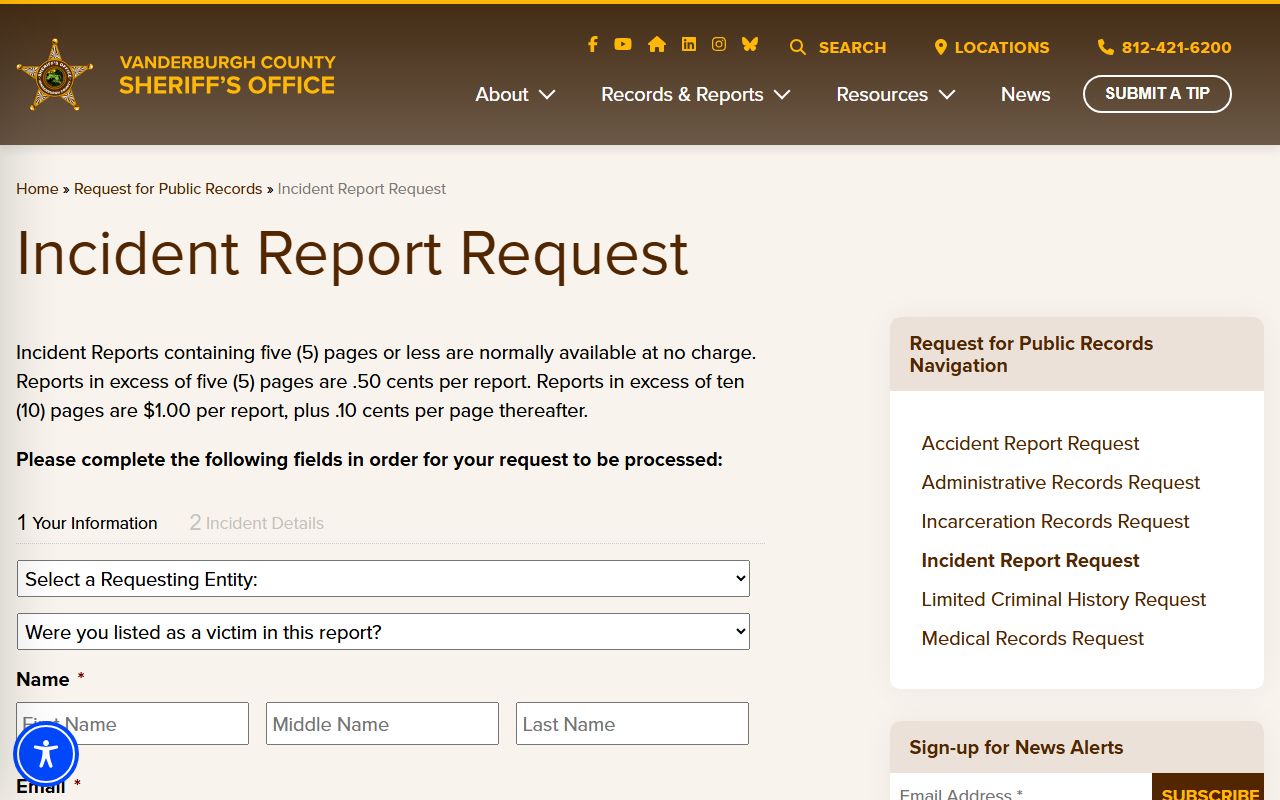
An incident report may explain the law-enforcement event, while the court file controls the charges filed after arrest.
Vanderburgh County Charge Access
Indiana public access rules apply to court charge records, while sheriff records use public-records request channels under Indiana public-records law. Adult criminal case information is generally public unless excluded by rule, statute, or court order. Juvenile records, adoption records, mental-health records, protected personal data, victim or witness contact information, sealed records, and expunged records are not ordinary public records.
The sheriff online forms menu is relevant because arrest-adjacent records may be requested outside the court system.
The Vanderburgh County Sheriff's forms page lists incarceration, incident, accident, criminal-history, medical, administrative, and access requests.
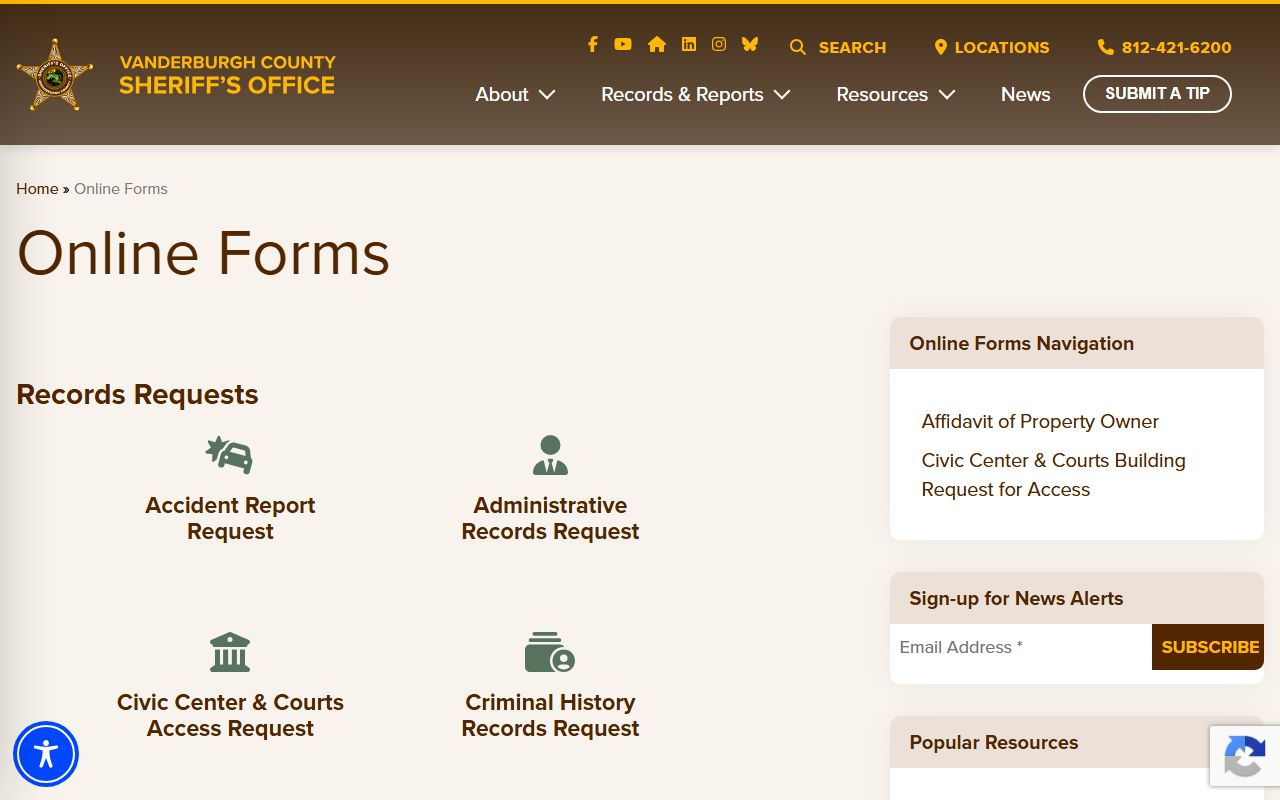
Those forms help separate sheriff-held arrest records from the court charges and final case record kept by the courts.
Sealed and Expunged Charges
Indiana expungement and sealing rules can restrict public access to eligible arrests, charges, and convictions. A person seeking restriction must identify the arrest, charge, or conviction records involved, confirm eligibility under Indiana law, and file in the proper county when required. If the court grants relief, ordinary public access can be limited, but authorized court and law-enforcement users may still have access.
| Point | Sealed | Expunged |
|---|---|---|
| Public visibility | Hidden from ordinary public view by rule or court order. | Restricted from public release after an eligible petition is granted. |
| Record still exists | Yes, under court control. | Yes for authorized uses, even when public release is limited. |
| Applies to | Confidential, protected, juvenile, or court-sealed material. | Eligible arrests, charges, and convictions under Indiana law. |
| Where to verify | Court or Clerk. | Court order and Clerk records. |
Get Vanderburgh Charge Records
Use the court or Clerk for court charge records, and use the sheriff for arrest, booking, incident, accident, incarceration, or warrant-related records. The Clerk of the Courts can help with official court copies when the request includes names, cause number, court, date range, and document type. The Sheriff's Office is headquartered at 3500 N. Harlan Avenue, Evansville, and lists jail and warrant phone channels through its public site. The old sheriff mobile app is not a current lookup channel because the Sheriff's Office notice says the former app is no longer operational or supported.
Vanderburgh County Clerk of the Courts
825 Sycamore Street
Evansville, IN 47708
812-435-5160
Fax: 812-435-5849
Vanderburgh County Sheriff's Office
3500 N. Harlan Avenue
Evansville, IN 47711
Jail and warrants: 812-421-6200
Warrant tip line: 812-421-6276
Important: Arrest records and charges are not final proof of guilt; read the court disposition before drawing conclusions.